
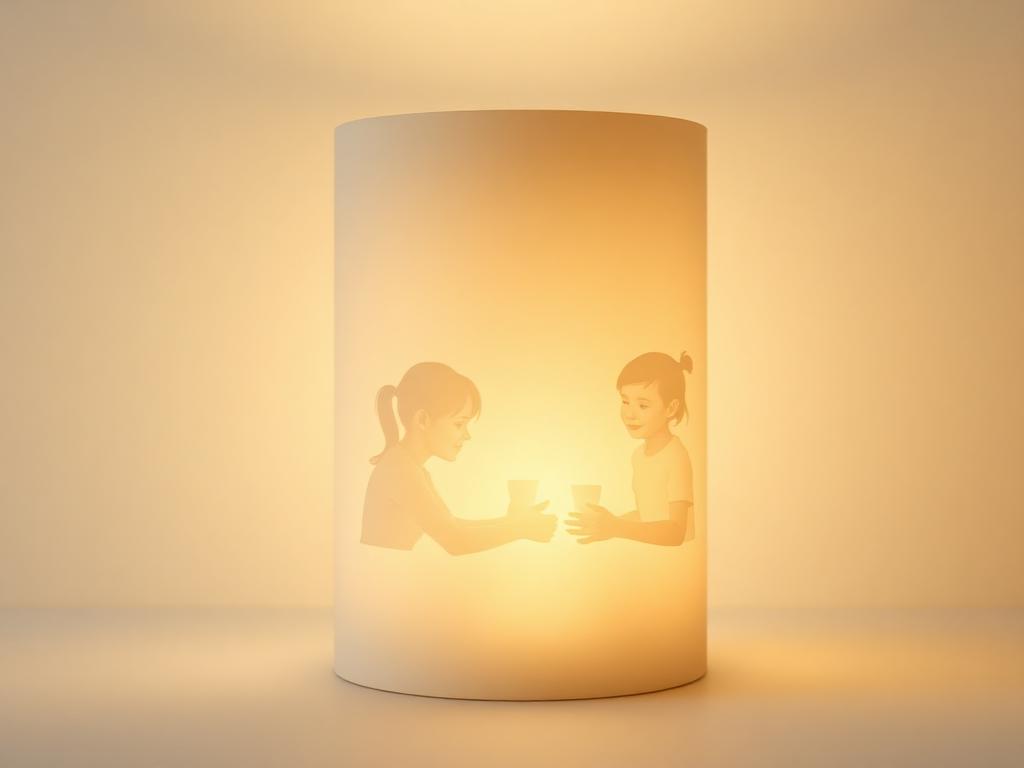
A lithophane is a thin, translucent panel with an image hidden inside it. The picture is not printed on the surface. Instead, it is built into the thickness of the material itself.
In normal light, a lithophane looks like a plain, textured slab. However, when you light it from behind, a detailed greyscale image appears. A window, a lamp or an LED panel all work well. Light and shadow then create the same depth and contrast you would see in a photograph.
Quick answer: a lithophane is an image formed by varying thickness. Thin areas let more light through and look bright. Thick areas block light and look dark. As a result, the picture only appears when the panel is backlit.
How does a lithophane work?
First, the photo is converted into a height map. The brightest parts of the image become the thinnest parts of the print, so more light shines through. In contrast, the darkest parts are printed thicker, so they block more light.
Next, a 3D printer builds this varying thickness layer by layer. As a result, a flat photo becomes a physical object with real depth. That is also why the image only appears once the lithophane is backlit.
The science of light and thickness
The effect relies on how light scatters through a translucent material. When light enters the panel, some of it is absorbed and some passes through. Each extra fraction of a millimetre absorbs a little more. Therefore, tiny changes in thickness create smooth shifts from white to deep grey.
In a typical 3D printed lithophane, the thinnest areas are well under a millimetre thick. Meanwhile, the darkest areas are around three millimetres thick. Within that small range, the printer creates hundreds of subtle tones.
Where did the lithophane come from?
Lithophanes are not a new invention. They first appeared in Europe in the 1820s, when they were made from thin, unglazed porcelain. Craftspeople carved the design into wax, then cast it in porcelain. You can read more about this history on Wikipedia’s lithophane page.
At the time, lithophanes decorated lampshades, window panels, candle screens and even the bottoms of tea cups and beer steins. Later, photography and cheaper printing replaced them. Today, however, 3D printing has brought the lithophane back. Now anyone can turn a personal photo into one.
How is a 3D printed lithophane made?
Making a lithophane takes a few careful steps. Here is how we approach each one.
1. Preparing the photo
We start by cropping and adjusting your photo. For example, we may boost contrast slightly or brighten faces. Good preparation makes a bigger difference than any printer setting.
2. Converting the image
Next, special software turns the photo into a 3D model. Each pixel becomes a tiny column with its own height. Together, these columns form the textured surface of the lithophane.
3. Printing slowly and finely
We then print the model using fine layers. A lithophane is usually printed standing upright. This way, the layer lines run across the image, and the finest detail stays sharp. The process takes time, but patience gives a much better result.
4. Checking under light
Finally, we check each lithophane against a light source. This confirms that faces, edges and highlights look right before it ships.
What makes a good lithophane photo?
Photos with strong contrast usually work best. A clear main subject also helps. For example, portraits, pet photos and landscapes with a clear horizon are all popular choices. On the other hand, very busy or low-contrast images can lose detail in the height map.
Tips for choosing your photo
- Keep faces large. Close-up portraits show far more detail than group shots from a distance.
- Choose good lighting. Photos taken in soft daylight usually convert best.
- Avoid clutter. A simple background helps the main subject stand out.
- Send the original file. A full-resolution photo keeps more detail than a screenshot or social media copy.
- Think in black and white. If a photo looks good in greyscale, it will likely make a good lithophane.
Photos that are harder to print
Some images need extra care. For instance, dark night photos often lose detail in the shadows. Similarly, large groups of people can make each face too small. In those cases, we may suggest a tighter crop or a different photo.
Why are lithophanes printed in white?
White material lets light pass through most evenly. As a result, it gives the widest range of tones and the most realistic image. Coloured materials absorb some light, so the picture looks darker and flatter.
For this reason, we usually print lithophanes in white PLA. PLA also captures fine detail very well. If you are curious about why, see our guide to choosing the right 3D printing material.
What shapes can a lithophane be?
A lithophane does not have to be flat. In fact, the shape changes how people display it. Popular options include:
- Flat panels for frames, window displays and stands.
- Curved panels that stand on their own and look great on a shelf.
- Cylinders that fit over a light to make a photo lamp.
- Heart and circle shapes for anniversaries and memorial gifts.
How do you light a lithophane?
Good lighting brings the image to life. Daylight from a window works, but it changes through the day. For consistent results, an LED light behind the panel is best.
We recommend LED lighting for another reason, too. LEDs stay cool, while old incandescent bulbs can get hot. Since PLA softens with heat, a cool light source keeps your lithophane safe for years. Warm white LEDs give a cosy, vintage glow. Cool white LEDs, on the other hand, give a crisper, modern look.
Why does a lithophane make such a good gift?
Most people have never seen a lithophane before. That is why they make such memorable gifts. At first it looks like an ordinary panel. Then, the moment it is lit from behind, it becomes a photograph.
Lithophanes are especially popular for:
- Anniversaries and weddings
- Birthdays and Mother’s or Father’s Day
- Memorials for loved ones and pets
- New baby and family milestones
Is a lithophane a good memorial gift?
Many people choose a lithophane to remember a loved one or a pet. The soft glow feels gentle and personal, which suits a quiet space such as a bedside table or shelf. In addition, the image stays hidden until the light is switched on. As a result, the moment of lighting it can feel like a small, private act of remembrance.
For a memorial lithophane, choose a clear, well-lit photo where the face is easy to see. A simple name and date can also be added below the image. Finally, pair it with a warm white LED for a calm, comforting glow.
How do you care for a lithophane?
A lithophane needs very little care. However, a few simple habits keep it looking its best:
- Dust it gently with a soft, dry cloth.
- Keep it out of hot cars and long spells of direct sun.
- Use an LED light source rather than a hot bulb.
- Handle it by the edges, because the thinnest areas are delicate.
Lithophane vs printed photo: what is the difference?
A printed photo is ink on paper, so you see it with light bouncing off the front. A lithophane, however, is lit from behind. Its image comes from the material itself, not from ink.
This creates a few clear differences:
- Depth: a lithophane has real physical relief, so the image looks almost three-dimensional when lit.
- Surprise: a printed photo is always visible, whereas a lithophane reveals its image only when lit.
- Durability: a lithophane has no ink to fade, so the image itself does not wash out in the same way.
- Tone: a lithophane is monochrome, which gives it a timeless, vintage feel.
In short, a printed photo shows a memory. A lithophane, on the other hand, turns that memory into a small piece of light art.
What size should a lithophane be?
Size affects both detail and display. Larger lithophanes show more detail, because there is more space for each part of the image. Smaller ones, meanwhile, suit desks, bedside tables and gifts.
As a rough guide:
- Small panels work well for single faces and pets.
- Medium panels suit couples and simple scenes.
- Larger panels are best for landscapes and small groups.
If your photo has lots of fine detail, choose a larger size. That way, every face and feature has room to show clearly.
How do you turn a lithophane into a lamp?
A lithophane lamp is one of the most popular ways to display one. Most use a cylinder or curved panel placed over a small LED light. When the light is on, the photo glows all the way around.
To plan a good lithophane lamp, keep these points in mind:
- Use an LED light. It stays cool, which protects the print.
- Centre the light. Even lighting avoids bright hot spots on one side.
- Choose the right photo shape. Wide photos suit cylinders, because the image wraps around.
- Consider warm white light. It gives a soft, nostalgic glow that suits family photos.
Can a lithophane include text?
Yes. A name, a date or a short message can be added to many lithophane designs. Simple, bold text works best, because very thin letters can be hard to read when lit. For example, a memorial lithophane might include a name and dates below the photo.
Frequently asked questions
Can a lithophane be in colour?
Most lithophanes are greyscale, because the image comes from thickness alone. Colour lithophanes do exist, but they need specialised multi-colour printing. For the clearest and most reliable result, a white lithophane is best.
How long does it take to print a lithophane?
It depends on size and detail. Because we use fine layers for sharp images, a single lithophane can take several hours to print. This slow approach is what makes the fine detail possible.
What size photo do I need?
Send the highest-resolution original you have. A photo straight from a modern phone camera is usually more than enough. However, small, compressed images from messaging apps can look soft.
Does a lithophane work without light?
Without backlighting, you will only see a faint, textured relief. The full photograph appears when light shines through it from behind.
Order your own custom lithophane
A lithophane turns a favourite memory into something you can hold and light up. We make them from your own photos as custom lithophane prints. Each one is ready to hang, stand or mount as a nightlight.
Not sure if your photo will work? Get in touch and send it over. We are happy to check it and suggest the best crop before you order.